Sunday, 8 July 2012

TASK 2 : NAME ONE OF YOUR FAVOURITE GAMES AND ANALYSE WHY DID YOU 
                 HAVE FUN PLAYING IT


FINDING DOGGY


Finding Doggy

Finding Doggy a moving story of a lost puppy.
Meet Doggy, a charming dog who has lost his way home. So you must help him to find the right path to reach his house. Match the same tiles in threes to remove them and see the signs. You can also gather bonuses and use the pieces of advice that your friends give you on  your way home. Help little Doggy come back home as quick as you can.


I have fun playing Finding Doggy because this game is a type of puzzle games. As we know a genre of puzzle games is about challenge our brain to think more with active thinking. I also likes the features of this game. The features consists of : 

  • 50 Story mode levels
  • Endless mode
  • Ability to play without a timer
  • Six desktop wallpapers
  • Five mini-games
  • 10 bonuses
  • Four unique obstacles
  • Four unique helpers


This will make the game look more attractive and powerful. Besides, player do not have to worry about the time because player is able to play without a timer. player also will not easy to give up because there are four unique helpers to help the player by give them clues.


TASK 3 : CHOOSE A GAME YOU DISLIKE AND ANALYSE ITS GAMEPLAY TYPE


GAMEPLAY : Technical term used by game designers. The heart of the player's mental 
                        experience of a game. Consists of the challange that a player must face to 
                       arrive at the object of the game and the actions that the player is permitted 
                       to take to address those challanges.


SUDOKU
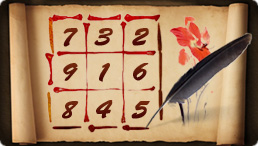
Sudoku - Beautiful Mind - games sudoku

Famous Japan puzzle with great art, 3 difficulty levels, load/save game progress and user friendly interface. The objective is to fill a 9×9 grid so that each column, each row, and each of the nine 3×3 boxes (also called blocks or regions) contain the digits from 1 to 9 only one time each. The puzzle setter provides a partially completed grid in this free Sudoku game. 

GAMEPLAY OF SUDOKU :

Each player will be on opposite sides of the screen, with their  score number just above them.

If you are playing in multiplayer mode, once the game begins both players should be trying their best to fill in as many of the squares with the correct number they can manage.


Sudoku gameplay


Saturday, 30 June 2012

one of my favourite game


    TASK 1 : CHOOSE ONE OF YOUR FAVOURITE GAMES, AND DISSECT GAME 
                    ACCORDING TO ITS STRUCTURAL ELEMENTS


 PUZZLE GAME


  • Puzzle games focus on logical and conceptual challenges, although occasionally the games add time-pressure or other action-elements. Games usually involve shapes, colors, or symbols, and the player must directly or indirectly manipulate them into a specific pattern.


  • Rather than presenting a random collection of puzzles to solve, puzzle games typically offer a series of related puzzles that are a variation on a single theme. This theme could involve pattern recognition, logic, or understanding a process. 


  • There is a large variety of puzzle games. Some feed to the player a random assortment of blocks or pieces that they must organize in the correct manner, such as Tetris, Klax and Lumines.  Others present a preset game board or pieces and challenge the player to solve the puzzle by achieving a goal (Bomberman, The Incredible Machine). Another type of puzzle game requires the player to build systems out of supplied parts. 

  • Puzzle games are often easy to develop and adapt, being manifest on dedicated arcade units, home video game consoles, personal digital assistants and mobile phones. 


classis structural elements of games: 
  • RULE-BASED

  • FEEDBACK DRIVEN

  • GOAL-ORIENTED

  • INTERACTION

  • REPRESENTATION

  • CHALLANGES

  1. RULE-BASED :  These games usually have a simple set of rules, where players manipulate game pieces on a grid,  network or other interaction space. Players must unravel clues in order to achieve some of victory condition, which will then allow them to advance to the next level. Completing each puzzle will usually lead to a more difficult challenge, although some games avoid exhausting the player by offering easier levels between more difficult ones.
        
     2. FEEDBACK DRIVEN : The types of puzzles to be solved can test many problem solving skills  
         including logic, strategy, pattern recognition, sequence solving, and word completion.


    3. GOAL-ORIENTED :  Action Puzzle Game or arcade puzzle requires that the player manipulates 
        game  pieces in a real-time environment, often on a single screen and with a time limit, to solve the 
        puzzle or  clear the level.This is a broad term that has been used to describe several subsets of puzzle 
        game. 
        
   4. INTERACTION :  Puzzle Game involve single-player interaction, that is " me vs the 
       situation ". Competition occurs when players have conflicting interests, that is, when the players try to  
       accomplish mutually exclusive goals.

  5. REPRESENTATION : Firstly, it includes falling-block puzzles such as Tetris and KLAX. It 
      includes  games with characters   moving through an environment, controlled either directly   
     or indirectly . This can cross-over with other action  genres: a platform game  which requires a novel 
     mechanic to complete levels might be a  "puzzle platformer", such as manipulating time in Braid.  Finally, 
     it includes   other  action games that require timing and accuracy with pattern-matching or logic skills, 
     such  as the   first-person Portal. 

 6. CHALLANGES  :  player manipulates game   pieces in a real-time environment, often on a single 
      screen  and with a time limit.  Action games that require timing and accuracy with pattern- matching or 
      logic skills.